


The night before a gaggle of Sydney’s most pretentious “thought leaders” gathered to discuss ways to make their city more exciting, I happened to walk past a small strip of restaurants in the fashionable suburb of Paddington where a normally expensive Mexican restaurant had advertised a special night of relatively cheap tacos, cocktails and live music.
There were maybe 200 hip 20-somethings on the street, all immaculately dressed in summer smart-casual. Most of them were standing in a queue to get in, which wasn’t moving very quickly. Rather than looking bored, however, their palpable relief that something interesting was finally happening in Sydney on a Thursday evening filled the street.
You can see the same phenomenon every night of the week outside the nearby Rose Bay RSL, which was recently given an expensive designer makeover by Justin Hemmes’ Merivale group. Merivale has a Midas touch, to be sure. But kids waiting for hours on a Saturday night to get into an RSL say more about the paucity of options available to them than they do about Hemmes’ crack team of designers, chefs and bar staff.
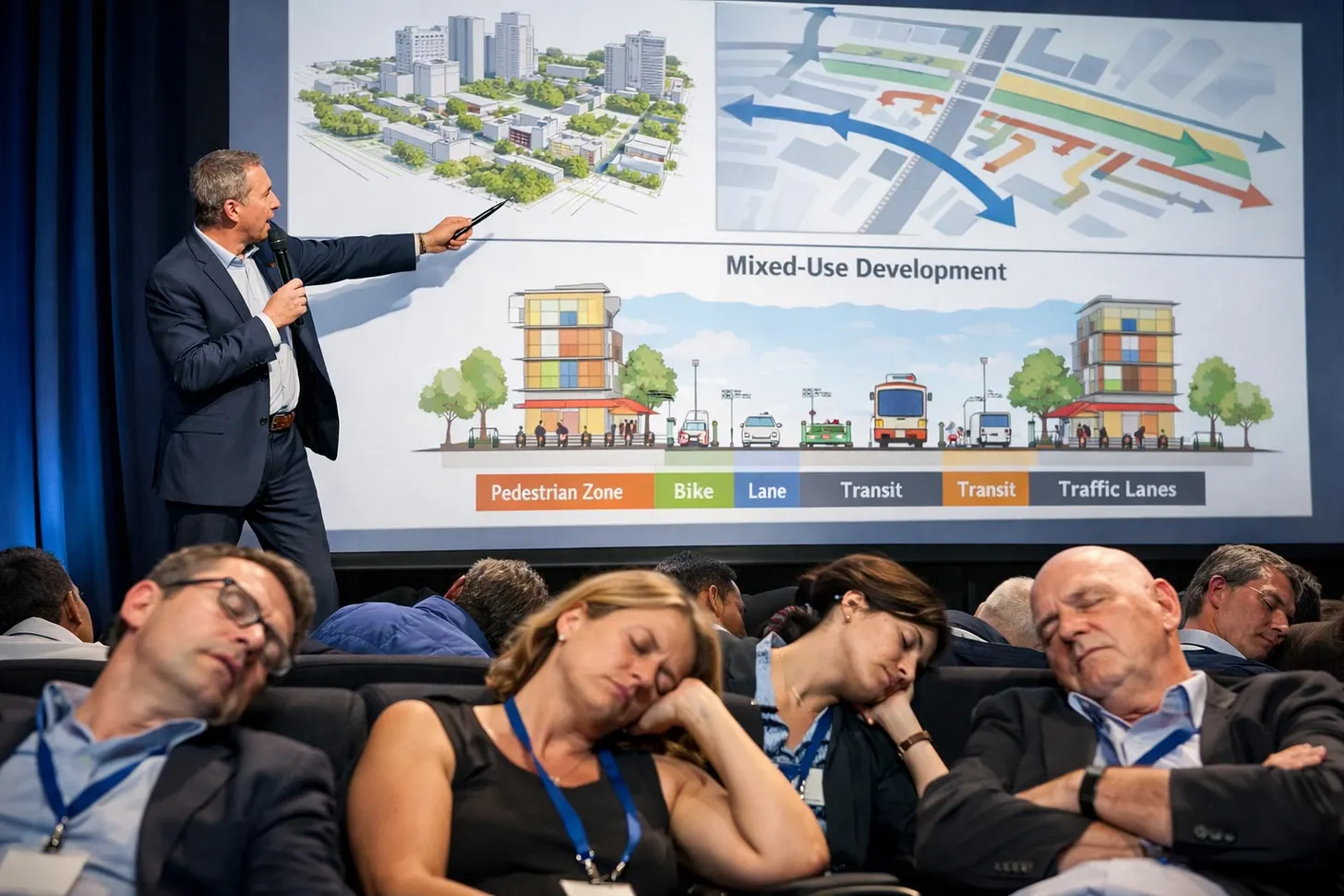
So you will understand why I scoffed when I read about the Sydney Summit 2026, the “agenda-setting” conference to discuss how to make Sydney more interesting, on the Sydney Morning Herald website yesterday. It’s not that Sydney doesn’t need an injection of life — it does — it’s that this bunch of managerial midwits wouldn’t recognise excitement if it came dressed in a leather catsuit brandishing a bottle of vodka and VIP tickets to a Burlesque Party on a luxury yacht in the harbour.
The venue they chose for this talkfest was, aptly, the lifeless concrete caverns of the International Convention Centre in Darling Harbour, which, as coincidence would have it, recently also hosted the National Suicide Prevention Conference. The organisers of the two events could have saved some money by joining forces, because they are essentially trying to solve the same problem.
As an aside, when I moved to Sydney in 1992 the city was one of the most exciting places I’d ever encountered. Admittedly I was a lot younger then, but I’m not recalling those days through the lens of sentimentality for my lost youth. The abundance of bars and clubs I used to frequent back then have almost all closed down, and the ones that remain have been gentrified. The streets that thronged with energetic life are now depressingly deserted, even on a Saturday night.
I noticed Sydney change after it hosted the 2000 Olympics. Not only did all that global mainstream attention dull the city’s wilder edges, but the Sydney Olympic Committee, which oversaw logistics for the extravaganza, introduced a new level of publicly funded bureaucrats with imaginary expertise in urban planning, of which the host of the Sydney Summit, the Committee for Sydney, is just the latest iteration.
Add to that the fact that Sydney has some of the most expensive real estate in the world, which means everyone who lives here is working 60 hours a week just to keep the bank from foreclosing or the landlord from evicting, and you can see how Sydney has, despite its glistening harbour and beautiful beaches, become intolerably boring and almost unrecognisable from the city I fell in love with 34 years ago.
I recently spent a week in Bangkok and was reminded what a real city felt like. There are bars on the top of many tall buildings, a rich sprinkling of Michelin-starred restaurants and the sort of optimistic, innovative vibe that can only happen in places where busybodies aren’t deciding what people can and can’t do.
Now, where was I? Oh, that’s right. Tax reform! Apparently that was one of the key issues at the Sydney Summit yesterday. The Sydney Morning Herald reports:
“The summit’s final session on bold governance has closed with a question to current and former political leaders from across the spectrum: should the government reduce capital gains tax exemptions for investor properties?
“Independent Wentworth MP Allegra Spender said: ‘I think you need to look at it in a broader tax reform. But yes, I think we need to reduce taxes on income, and I think we need to look at tax concessions on wealth, including capital gains.’”
Former Prime Minister Malcolm Turnbull, arguably the perfect archetype of a useless busybody, and therefore a speaker par excellence for such a gathering, agreed. After taking the opportunity to boast about his former government’s reforms to superannuation, he said, “Looking at capital gains tax is another area there.”
Credit where it’s due: property prices have made Sydney impossible to enjoy. But that’s far from the only issue. Besides, these dullards talking about how to make a city more exciting through tax reform is like the captain of the Titanic requesting the band play his favourite tune while frozen water washes over the deck.
It was ten years ago this week that businessman Matt Barrie published on LinkedIn a long, widely read investigation into Sydney’s recently introduced, harsh liquor licensing laws, which he called Would the Last Person in Sydney Please Turn the Lights Out?
“The total and utter destruction of Sydney’s nightlife is almost complete,” he said. “A succession of incompetent governments has systematically dismantled the entire night time economy through a constant barrage of rules, regulation and social tinkering.”
Ten years later, as Sydney drowns in even more over-regulation, the attendees of yesterday’s summit reached the scintillating conclusion that what the city needs is even more social tinkering.
“As our city flexes and grows, we’ve got to do more than just deliver homes,” said Matt Levinson, who goes by the prestigious title of Culture Policy Lead at the Committee for Sydney. “We have to make sure communities have access to the things that make life great and bring us together.”
Do you, though, Matt? Has it occurred to you that people can create the “things that make life great” without busybodies like you doing it for them? And as for things that “bring us together”, that wasn’t necessary before other branches of government decided four decades ago that what Australia really needed was an archipelago of ethnic ghettos in its suburbs. It’s just a guess, but I doubt there are any committees in Japan, Poland, Hungary, China, Russia and Uzbekistan, or any other country whose leaders didn’t buy the multiculti sales pitch, sitting around dreaming up ways to “bring us together”.
The conference also contemplated the nexus between urban planning and climate change, renovating public toilets and making the city more accessible to the “neurodivergent”.
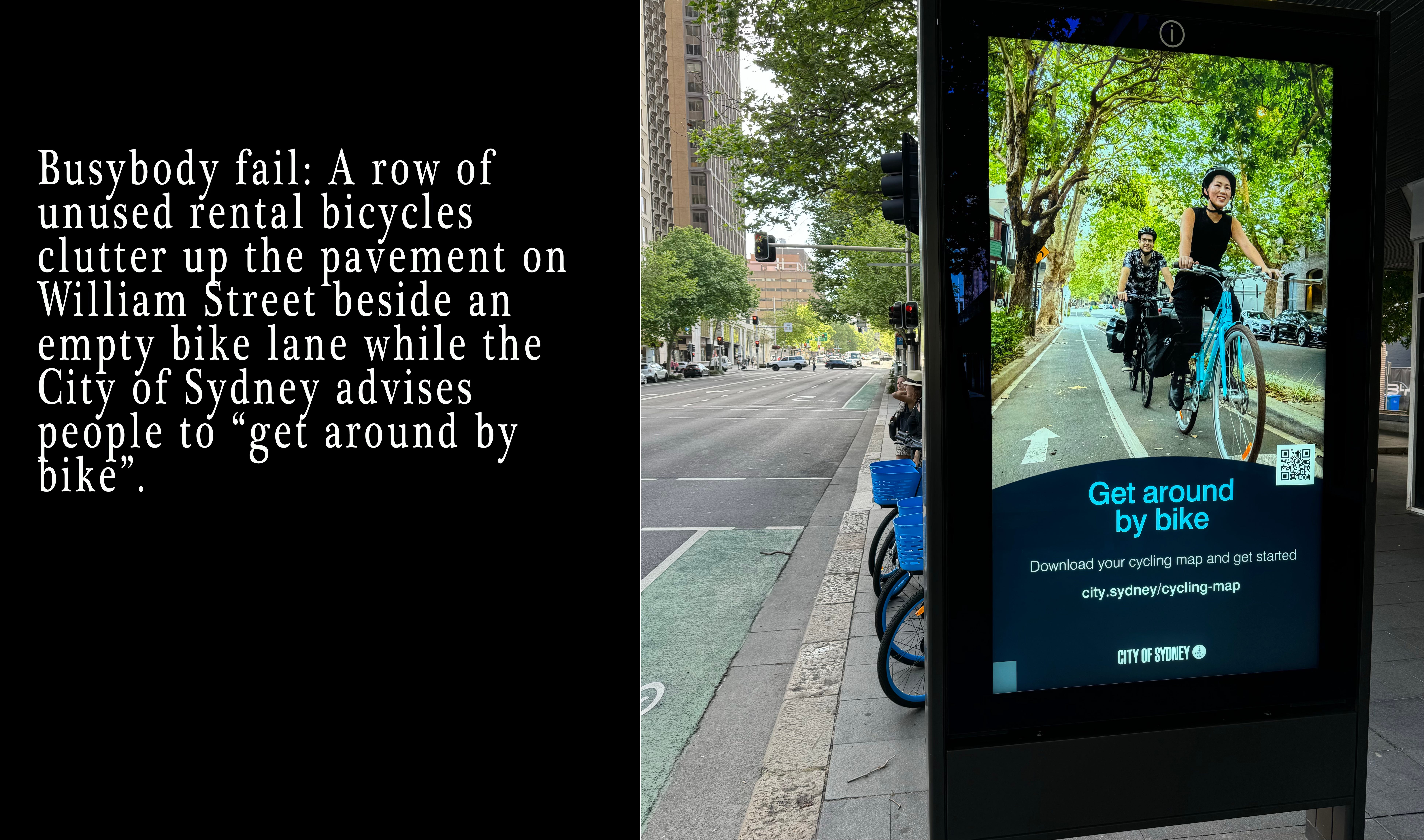
These people conjure up artificial projects to justify their artificial jobs. It would be nice to be able to ignore them, but they have considerable power. The Committee for Sydney has cleverly consolidated itself by signing up dozens of corporations, councils, government departments, banks, consultancy firms, media companies etcetera that have offices in Sydney as financial supporters. It looks almost like a protection racket.
The committee’s self-proclaimed mission is to “Bring the right people together to explore the most important issues that will affect the future of Sydney, develop solutions that will solve problems at scale and lead a conversation that can change the way people think”.
Change the way people think? That’s a little authoritarian, wound’t you say?
It’s getting to the point where the only way to escape these intolerable bores is to leave the city altogether, and find somewhere more exciting to live.


