


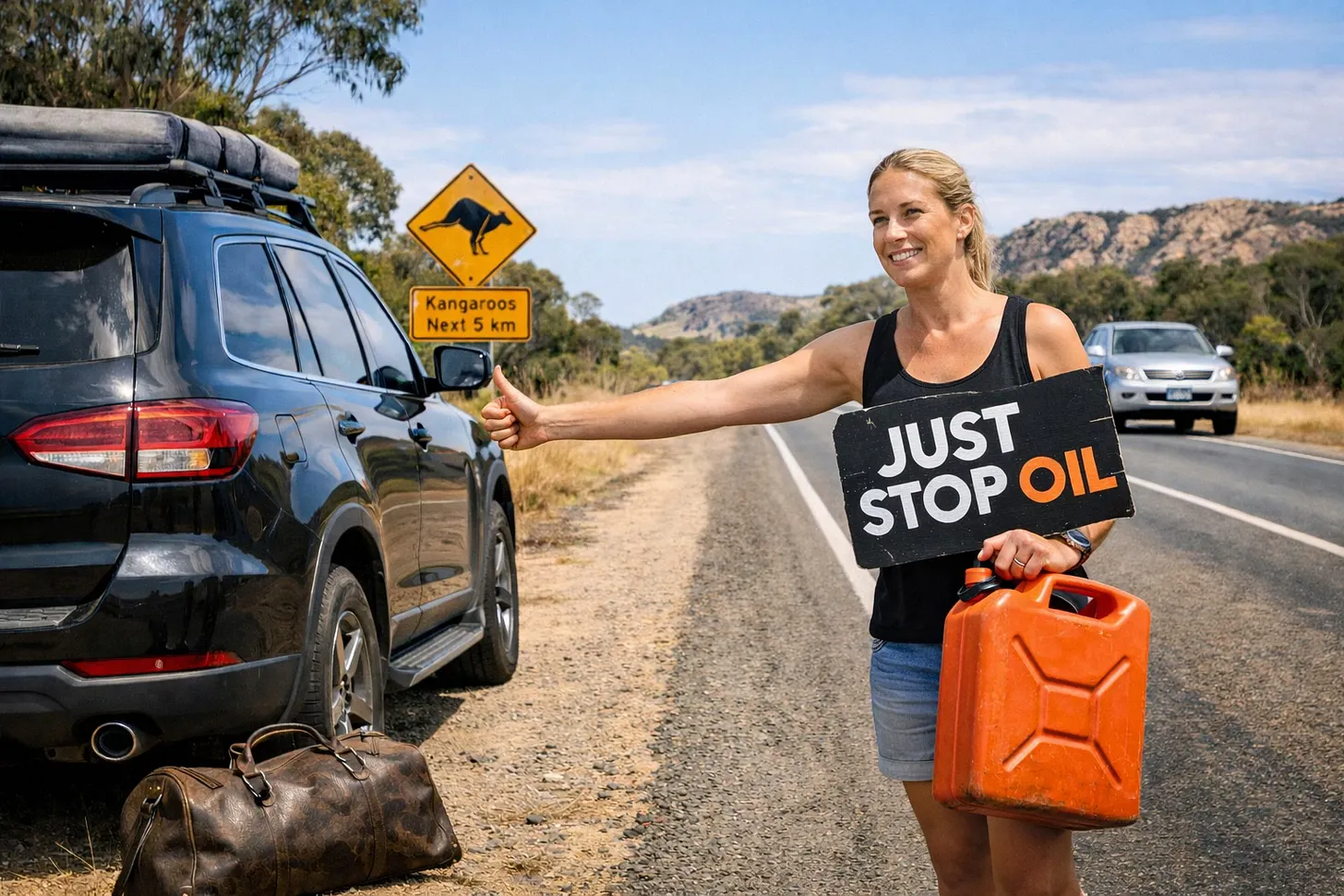
By virtually closing the Straits of Hormuz, the Iranian regime has in one stroke achieved what our friends in the “climate change” caper have been trying to do for decades.
Instead of gluing themselves to roads and throwing paint at priceless artworks, the mullahs, who are slightly more ruthless than the soy boys of Just Stop Oil, Extinction Rebellion and Antifa, simply fired a barrage of munitions at random oil tankers, damaging ten of them, and discouraging shipping operators and insurance companies from running the Gulf gauntlet for the foreseeable.
As such, the trade route for 20 per cent of the world’s oil has been reduced to a trickle.
The mullahs’ objective differs only slightly from those of their would-be emulators in the protest movement. The former want to destroy the West for being too decadent, the latter want to destroy the West for not being decadent enough. But their desired method is the same: grind developed countries to a halt by choking off the fuel that keeps them operating.
And they’ve done it! More than 23,000 international flights have been cancelled, and motorists are queueing up to panic-buy petrol at unprecedented prices or reducing their use of cars altogether. Life in the indulgently lazy West is suddenly imbued with an extra level of panic and uncertainty.
So you’d think that this would be a moment of triumph for the protesters, right? After all those years of yelling at car drivers, waving banners about rampant consumerism and chaining themselves to coal trains, why aren’t they on the streets celebrating the fact that they are now finally getting what they wanted, and that their beloved planet is enjoying a slight breather from humanity’s relentless polluting?
Two reasons. One, this brief interruption to oil consumption was caused by US President Donald Trump’s attack on Iran. Not even the most die-hard warrior for planetary health would stoop so low as to ally himself, even indirectly, with a man whose own carbon footprint is bigger than the Great Pacific Garbage Patch.
The other reason is that the West’s home-grown protesters are actually afraid of achieving their own goals, although they would rather die than admit it.
The more affluent among them — the Teal-voting Karens who live in inner-city mansions — know that the price of a single-origin Brazilian latte is high enough already without adding millions of dollars to the cost of delivering the beans from some Third World forest to the cafes of Toorak and Double Bay. It’s hard enough having one’s flights to Paris for Fashion Week cancelled without having to pay double for basic necessities at home.
The Karens’ political activism is carefully confined, however, to voting for Teals like Zali Steggall, Monique Ryan and Allegra Spender, whose obsession with climate action stops judiciously short of planting windmills in the parkland, beaches and golf courses between their constituents’ mansions. Windmills are lovely and all that, but salubrious surroundings are lovelier. Let the people who don’t have million-dollar views look at them instead.
Unlikely thought it sounds, the hypocrisy of the environmentalists at the other end of the socioeconomic spectrum is even more overt. I was reminded about this as the nation struck up a debate this week about the importance of fuel supply and how vulnerable that supply is to geopolitics if, like Australia, you make yourself reliant on foreign sources.
There have been countless retarded protest campaigns in Australia in recent years, but I doubt any have been as retarded as the one that came under the banner of “Fight for the Bight”, which culminated in a win for the environmentalists six years ago.
The goal was to prevent Norwegian energy company Equinor from exploring for oil and gas in deep water 400km off the beach in the middle of the Great Australian Bight.
Equinor naively thought that keeping potential protesters informed about the proposal would generate goodwill and prevent their antagonists going batshit crazy. But whoever made that decision didn’t know how batshit crazy Australian protesters already were.
Greenpeace conflated more than 100 worst-case spill scenarios into one illustration depicting a spill almost as big as the Australian continent. This inflamed surfers from the southwest cape of Western Australia to South Australia, Victoria and Tasmania and all the way up to Port Macquarie in New South Wales.
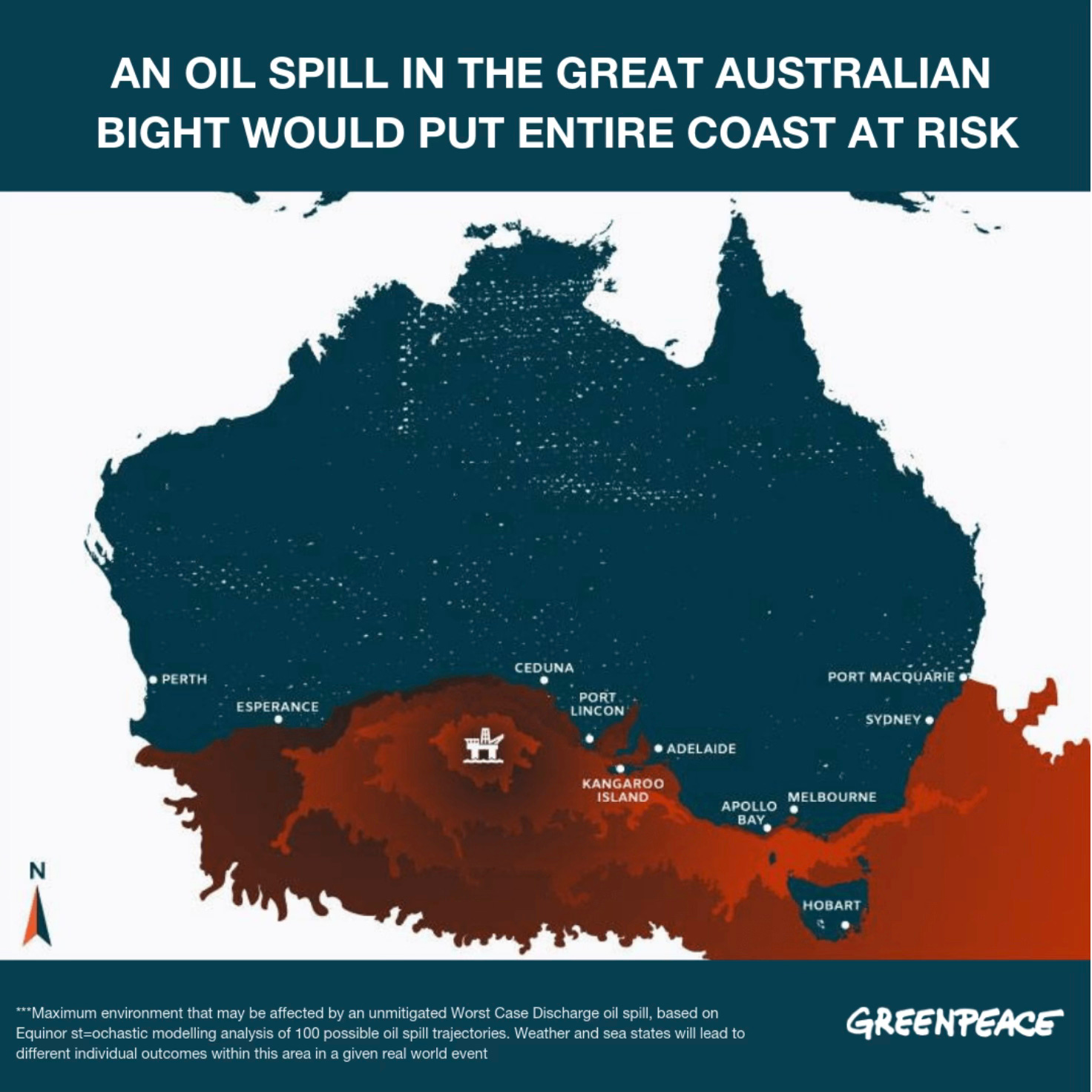
Most of these surfers had been surfing and living happily alongside the oil and gas fields of Bass Strait without incident for more than half a century. But Equinor’s single rig hundreds of kilometres further away, far out in the Bight, somehow posed a bigger threat, inspiring a relentless campaign.
The protest featured two hilarious moments. Firstly, former pro surfer Heath Joske flew to Oslo to tell the Norwegians how angry he and other Australian surfers were with them. While there, he paddled a surfboard into the harbour for a photo opportunity in which he showed how angry he was.
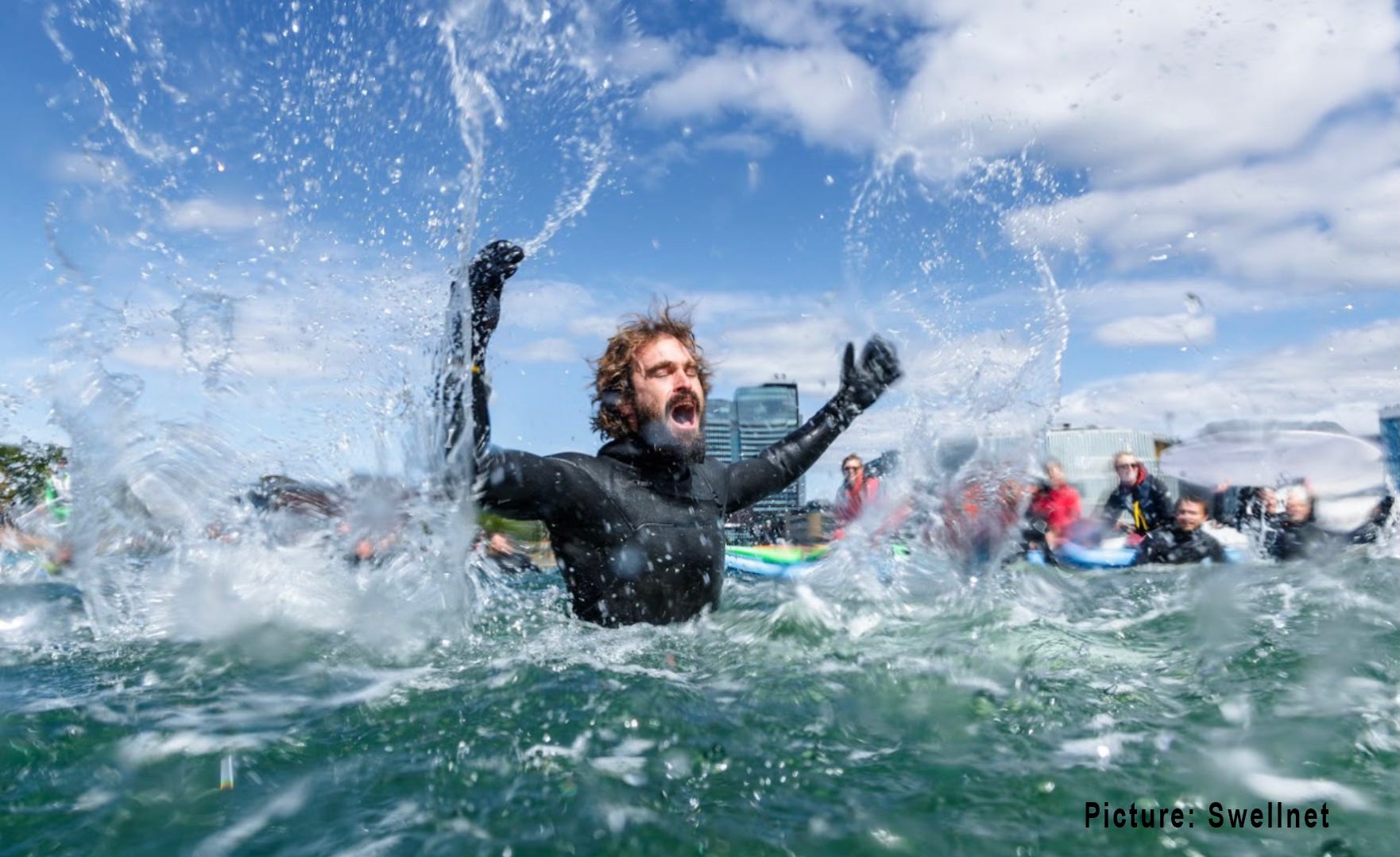
Every stage and prop of this pantomime — including the flight to Oslo, the surfboard he used, the wetsuit that saved him catching hypothermia and the camera that recorded the moment for posterity — was made possible by… oil.
The other hilarious moment was when the pro surfing tour visited Bells Beach, Victoria, in April 2019. A gaggle of competitors participated in a “paddle-out” between heats to help publicise the local surfers’ protest. The tour’s main sponsor at the time was Jeep, which is best known for being not the most fuel-efficient brand on the market. Jeep withdrew its support for the pro tour the next year.
Although Equinor was able to secure technical approval for its proposal, it eventually realised that its detractors’ delusions were incurable, and, conscious of the political power of environmentalists in Australia, voluntarily withdrew its application in 2020.
Had Equinor’s exploration for oil been allowed to go ahead, Australia might by now have another source of the raw material that makes modern life possible, and Australia would be less vulnerable to Trump’s adventures in the Gulf.
Unlike their rich counterparts, who are careful to make sure they remain unaffected by the consequences of their own environmental idealism, the people who chased Equinor out of Australia may well soon find that they can no longer afford new surfboards, wetsuits and flights to the surf paradise of Indonesia.
That is why they haven’t cheered Iran’s attack on oil supplies. It affects them as much as everybody else. But they knew that all along.


