


Encounters with sharks demand a decisive response. When surf lifesavers detect a shark at a beach, the call to all nearby swimmers and surfers is instant and unequivocal: get out of the water. And that decisiveness remains until a jetski and/or drone has thoroughly surveyed the area and given the all-clear.
In an attack, decisiveness is even more acute. Good people swim or paddle towards danger to help the person being attacked, often saving a life. Every time an attack is recorded on camera, the grainy footage shows brave friends and strangers helping the victim to shore. This is the response that we have all been conditioned to make instinctively. Our culture tells us from birth that we are not in this life alone. Being able to rely on others, even if they are strangers, as they rely on you, especially in an emergency, is what makes life in our society safer and, it goes without saying, happier.
Which is an interesting context in which to see the indecision of politicians regarding this area of public policy. Mention the words “man-eating shark” to any politician and watch their eyes glaze over and the cogs in their head grind to a halt, jammed by the mental gridlock of conflicting political interests.
The New South Wales government established the pattern for this indecision under then Premier Mike Baird in 2015, with the introduction of the so-called SMART drumlines. These devices were never designed to keep people safe. Rather, they were designed to placate ocean lovers, by catching dangerous sharks near beaches, as well as the opposing group of environmentalists and shark lovers, by tagging them and letting them go.
These drumlines have been an expensive, catastrophic failure because they have diverted attention away from the real problem, which is the undeniable explosion in the size and abundance of sharks at our beaches, and towards an unnecessarily complex “solution” to shark attacks. A report for the Department of Primary Industries in 2022 said the strategy’s effectiveness was “not apparent”.
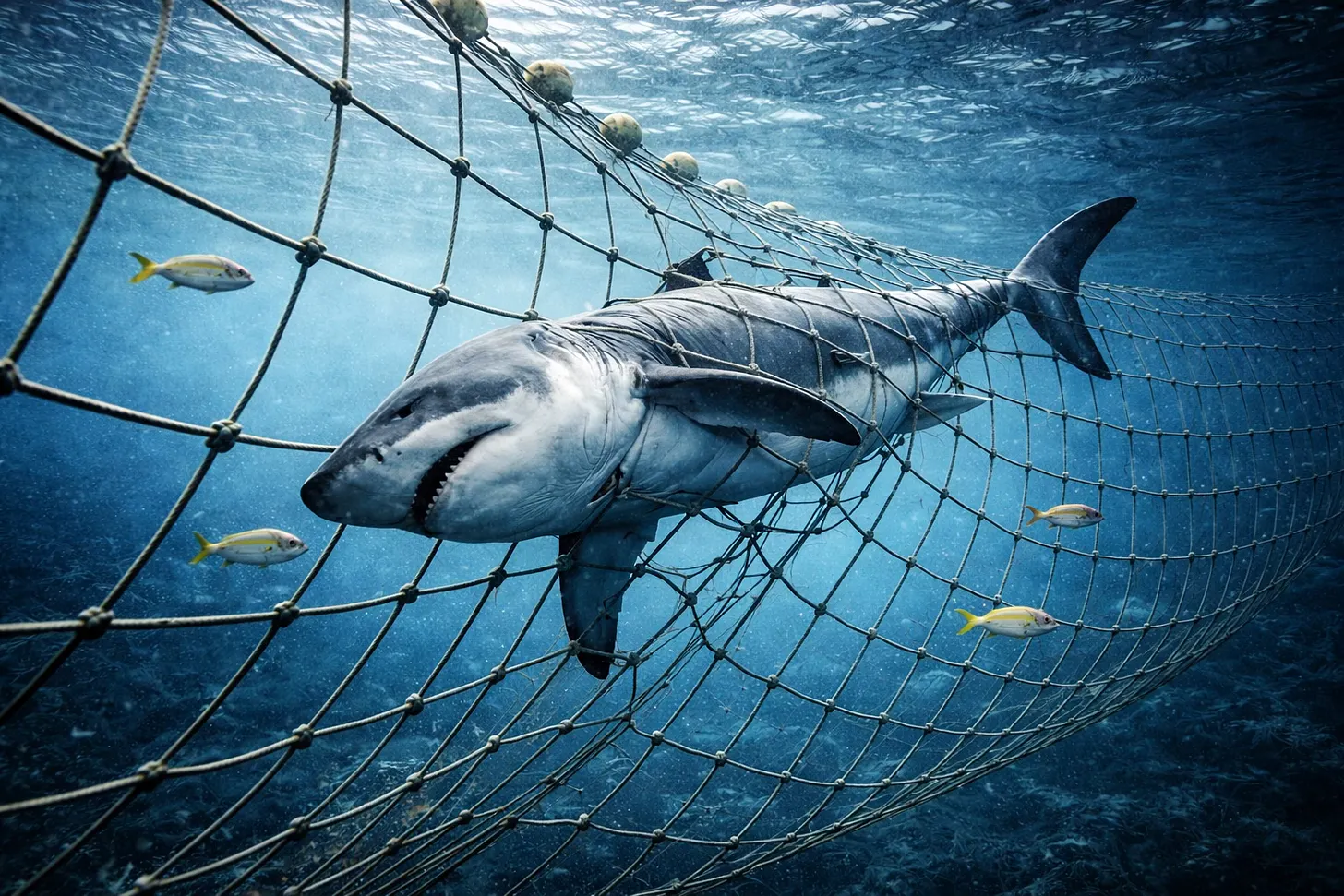
But the more people are killed or injured by sharks, the more indecisive the government becomes, especially regarding the one element of the government’s strategy that is effective, the 51 protective nets that are placed off popular beaches in Sydney, Newcastle and Wollongong every summer.
Last summer, the government decided to pull these nets out a month earlier than usual because environmentalists were upset that they are a lethal method of protection, which were also killing dolphins and turtles. Then in June 2025 it was announced that some local councils would each be given the opportunity to choose one net from one beach that would not be installed at all during the forthcoming (now current) summer. This was a sickeningly cynical political ploy because it delegated a potentially fatal decision to councils, washing the state representatives’ hands of any responsibility should there be an attack.
But when surfer Mercury Psillakis was fatally attacked by a great white at Dee Why in October, before summer had even started, the decision to reduce the use of nets was suddenly reversed by none other than the Premier, Chris Minns. Minns was essentially admitting that the nets are effective in reducing attacks (which is supported by statistics of attacks since nets were introduced in 1937), but couldn’t bring himself to say so explicitly because it would upset a significant cohort of the electorate that places sharks’ lives above those of humans who dare to enter the water.
So against all that, it is an enormous relief that Liberal Member of the Legislative Council Rachel Merton is becoming more emphatic — and, dare I say it, decisive — about the need for shark nets.
“Shark nets are critical,” she told me with admirable gusto and conviction this week. “We have to have them in place at popular swimming spots to keep swimmers’ confidence, security and safety. They need to be there all year round.”
You can’t be more decisive than that. She also says that the experts in the Department of Primary Industries who are charged with implementing the government’s policy have become too influential. “Some of the so-called experts are environmentalists, they’re political activists. And this is a hot issue for them,” she says.
Merton is confident that an increasingly large section of the electorate is with her on this. “The vast majority of the community, families, are saying the priority is safety at the beach. For swimmers, for kids. Also for tourism and small business. It’s the responsible way to go.
“The opinions are very strong on this. The government needs to listen. The tide is turning on the issue. The community is saying enough is enough. Safety at the beach has to be the priority, and shark nets need to be maintained and in place.”
The government has gone conspicuously quiet on this topic. Its strategy seems to be to say and do nothing and hope nobody else will be attacked. This is no way to run a state. We need decisive leaders, especially when it comes to matters of life and death.
Thank goodness for politicians like Merton. The state, and the Liberal Party, needs more people like her, who place the safety of their constituents above the welfare of sharks.


